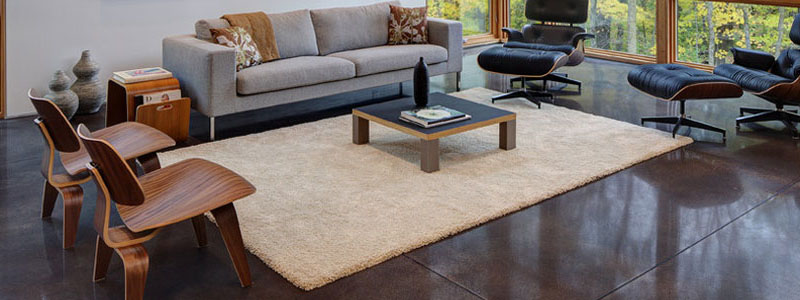
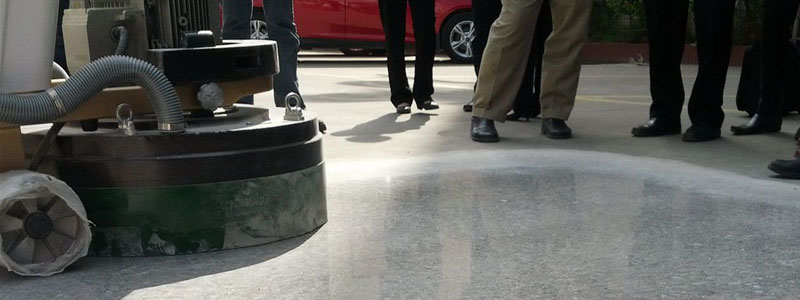
Polished concrete is a flooring solution that blends durability with aesthetics, offering a seamless, high-performance surface for residential, commercial, and industrial spaces. However, not all polished concrete floors are created equal. The levels of polished concrete and types of polished concrete floors vary based on the degree of refinement, sheen, and surface exposure. Understanding these distinctions is key to selecting the ideal finish for your project.
Polished Concrete Levels: Defining the Gloss and Smoothness
Polished concrete levels refer to the degree of shine and reflectivity achieved through mechanical grinding and polishing. The process involves multiple passes with progressively finer diamond abrasives, transforming a raw concrete slab into a sleek, sophisticated surface. The higher the level, the glossier the finish.
Levels of Polished Concrete
- Level 1 – Matte Finish (100 Grit or Lower)
- Low-reflectivity with a flat appearance.
- No visible clarity or mirror effect.
- Ideal for industrial spaces where slip resistance and durability are prioritized over aesthetics.
- Level 2 – Low Sheen (400 Grit Polish)
- A soft satin-like finish with minimal light reflectivity.
- Slight improvement in smoothness and surface uniformity.
- Suitable for retail stores, warehouses, and restaurants seeking a subtle polished look.
- Level 3 – Semi-Gloss (800 Grit Polish)
- Noticeable reflectivity with clear image distinction.
- Smooth texture with enhanced depth and richness.
- Popular in showrooms, offices, and commercial settings aiming for a professional finish.
- Level 4 – High-Gloss (1500+ Grit Polish)
- Ultra-reflective surface with mirror-like clarity.
- Premium finish that enhances modern, upscale environments.
- Frequently used in luxury residences, corporate lobbies, and high-end retail spaces.
Types of Polished Concrete: Surface Exposure and Variations
While concrete polish levels determine the sheen, the types of polished concrete floors are categorized based on the level of aggregate exposure. The aggregate—the stone or sand embedded within the concrete mix—can be revealed to different degrees, affecting both aesthetics and texture.
Types of Polished Concrete Floors
- Cream Finish (Minimal Exposure Polished Concrete)
- Achieved with light grinding, preserving the natural smooth surface of the concrete.
- Delivers a clean, monochromatic look with subtle variations.
- Ideal for modern industrial designs that favor a sleek, uniform aesthetic.
- Salt and Pepper Finish (Fine Aggregate Exposure)
- Requires moderate grinding to expose fine aggregate particles.
- Offers a speckled, lightly textured appearance.
- Commonly found in commercial interiors and residential spaces desiring a balanced look.
- Medium Aggregate Exposure Polished Concrete
- Involves deeper grinding to reveal mid-sized stones within the concrete.
- Provides a distinctive decorative element, adding depth and contrast.
- A popular choice for artistic and architectural flooring applications.
- Full Aggregate Exposure Polished Concrete
- Extensive grinding to fully expose large aggregate materials.
- Creates a terrazzo-like effect with bold, eye-catching patterns.
- Often utilized in high-end spaces requiring a statement floor with exceptional durability.
Concrete Polish Levels: How to Choose the Right One
Selecting the right level of concrete polishing depends on the function and aesthetic goals of the space.
- Industrial & Warehouses → Level 1 or Level 2 with minimal aggregate exposure for cost-effective durability.
- Retail & Offices → Level 3 with a salt and pepper or medium aggregate finish for a refined yet practical surface.
- Luxury Homes & Showrooms → Level 4 with full aggregate exposure for a high-end, sophisticated appearance.
Frequently Asked Questions
What is the difference between Level 2 and Level 3 polished concrete?
The primary difference lies in the level of shine and reflectivity. Level 2 polished concrete, finished with a 400-grit polish, has a low sheen with minimal reflection. It provides a smooth feel but lacks distinct image clarity. Level 3 polished concrete, refined to an 800-grit polish, has a semi-gloss effect with noticeable reflectivity. It enhances color vibrancy and adds depth to the surface, making it a popular choice for commercial interiors.
What is Level 2 low sheen 400 grit polish?
A Level 2 low sheen 400 grit polish refers to a concrete floor polished using 400-grit diamond abrasives. This level creates a soft satin finish, offering moderate smoothness without significant reflectivity. It is an excellent option for businesses and warehouses where functionality takes precedence over a high-gloss appearance.
What are the different types of polished concrete floors?
Polished concrete floors are categorized based on aggregate exposure levels:
- Cream Finish – No exposure, smooth, monochromatic look.
- Salt and Pepper Finish – Minimal exposure, light speckled effect.
- Medium Aggregate Finish – Moderate exposure, decorative aesthetic.
- Full Aggregate Finish – Complete exposure, terrazzo-like appearance.
Each type offers unique visual and functional benefits, catering to different architectural and design preferences.
What are the levels of polishing?
Polishing levels are classified based on grit refinement and gloss level:
- Level 1 → Matte finish, low reflectivity.
- Level 2 → Low sheen, smooth but not highly reflective.
- Level 3 → Semi-gloss, clear image distinction.
- Level 4 → High-gloss, mirror-like clarity.
The choice of level depends on the desired aesthetic, maintenance expectations, and space functionality.
What are the different levels of concrete finishes?
Concrete finishes determine the surface texture and final appearance:
- Polished Concrete Finish → Mechanically refined for a smooth, reflective surface.
- Sealed Concrete Finish → Topical sealers enhance durability but require reapplication.
- Broom Finish → Textured surface created using a broom for slip resistance.
- Trowel Finish → Smooth, hard finish achieved with hand or machine troweling.
- Stamped Concrete Finish → Imprinted patterns mimicking stone, brick, or tile.
Conclusion: Choosing the Right Polished Concrete for Your Space
Polished concrete floors offer an unparalleled blend of durability, elegance, and versatility. Understanding polished concrete levels and types of polished concrete floors ensures you select the right finish for your environment—whether it’s a high-traffic warehouse, a modern office, or a luxury residential space.For expert concrete polishing services in Dallas, TX, visit Polished Concrete Dallas TX to explore premium flooring solutions tailored to your needs. Værdiborg