Why Industrial Flooring Demands More Than Strength
An industrial concrete floor isn’t just a surface—it’s a support system for everything your business does. It carries machines, bears forklift traffic, handles chemical spills, and anchors workflow zones. When that floor fails, productivity falters. That’s why the demands of industrial spaces require flooring that’s engineered for endurance.
Whether you’re constructing from the ground up or upgrading industrial concrete floor slabs, the decision to polish, reinforce, or reseal can dramatically affect efficiency, safety, and costs. This guide breaks down what to look for, what to avoid, and how to build smarter.
Key Benefits of Industrial Concrete Floors
Installing or polishing an industrial concrete floor offers immediate and long-term advantages for facilities that can’t afford downtime:
- Extreme load-bearing capacity for heavy equipment and shelving
- Abrasion resistance that outlasts epoxy or vinyl coatings
- Minimal maintenance with no peeling, waxing, or grout lines
- Slip resistance and safety additives for compliance
- Reflectivity that improves lighting and visibility
For facilities like manufacturing plants, food-processing centers, and warehouses, concrete is not only functional—it’s essential.
Comparison Table: Industrial Flooring Options at a Glance
Choosing the right flooring isn’t just about strength—it’s about long-term performance. In demanding industrial environments, that means looking beyond short-term fixes or finishes. Durability, load tolerance, ease of maintenance, and safety underfoot all play critical roles in operational efficiency. Here’s how industrial concrete floors compare to other commercial options:
| Flooring Type | Load Capacity | Lifespan | Maintenance Needs | Slip Resistance | Best Use Cases |
| Polished Industrial Concrete | Very High | 15–25 years | Low | High (with additive) | Warehouses, Plants, Clean Rooms |
| Epoxy-Coated Concrete | High | 5–10 years | Moderate | Moderate | Labs, Auto Shops, Wet Areas |
| Industrial Vinyl or Tile | Medium | 5–10 years | High | Low–Moderate | Admin Areas, Break Rooms |
| Rubber Flooring | Medium | 7–10 years | Moderate | High | Gyms, Assembly Lines |
| Sealed Basic Concrete | Medium–High | 3–7 years | Moderate–High | Medium | Utility Rooms, Storage Areas |
Polished concrete stands out for long-term performance, low total cost of ownership, and minimal disruption during upkeep. Its seamless surface resists staining, scratching, and wear even in high-impact zones. Unlike coated options that require frequent touch-ups or reapplications, polished concrete retains its integrity and visual appeal with little more than routine cleaning. For facilities aiming to minimize downtime and maximize ROI, it’s an unmatched flooring choice.
Industrial Concrete Polishing: Why It’s the Gold Standard
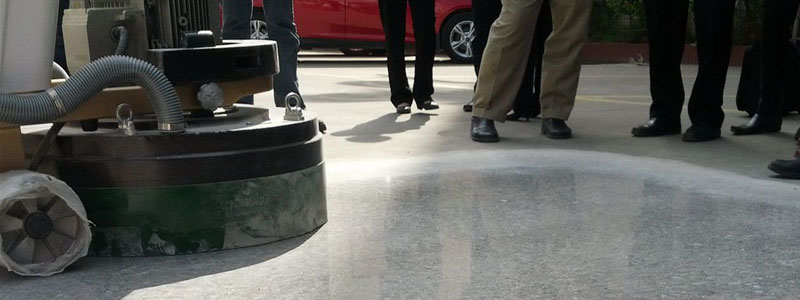
Industrial concrete polishing involves grinding the slab down to a dense, smooth surface that resists damage and increases reflectivity. It eliminates the need for surface coatings, which often chip, peel, or discolor.
Benefits of polishing include:
- Dense surface that resists water and oil
- Better light distribution, reducing energy costs
- No VOCs or fumes—eco-friendly installation
- Easy to clean with floor scrubbers or mops
Unlike coatings, which wear out over time, polished concrete integrates durability directly into the slab.
Industrial Polished Concrete Floors: Built for Reality
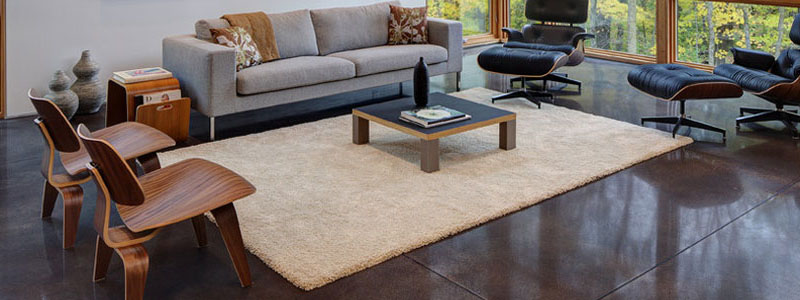
Industrial polished concrete floors aren’t just tough—they’re smart. These floors can be customized to meet specific operational needs:
- Matte to high-gloss finishes depending on usage
- Safety lines and zoning are integrated through dyes or scoring
- Anti-slip treatments to meet OSHA and ADA compliance
They’re ideal for facilities needing both resilience and regulatory compliance. No need to compromise beauty for strength.
What to Know About Industrial Concrete Floor Slabs
Your surface is only as strong as its foundation. That’s why industrial concrete floor slabs must be properly prepared before polishing or sealing.
What matters most:
Flatness: Irregular surfaces increase wear and risk
Moisture content: Excess RH can cause coating failure
Reinforcement: Rebar or mesh may be required for high-load zones
Our team tests, preps, and adjusts slabs to ensure they’re suitable for polishing or resurfacing.
Industrial Concrete Floor Polishing Process
Our expert approach to industrial concrete floor polishing ensures performance from the substrate up:
Inspection: Evaluate slab hardness, moisture, and condition
Grinding: Coarse to fine grinding removes imperfections
Densifying: A hardener penetrates to increase surface strength
Polishing: Multiple grit passes achieve the desired sheen
Sealing (optional): Added layer for stain and moisture protection
Burnishing: Final buff for optimal clarity and reflectivity
Each step is done with commercial-grade tools and dust-containment systems, minimizing disruption to your operations.
FAQ: Everything You Should Know About Industrial Concrete Floors
Q: How long do industrial concrete floors last?
A: Properly installed and maintained, they can last 15–25 years or longer. Their durability depends on slab quality, use case, and whether polishing was done correctly. Routine cleaning and touch-up polishing can dramatically extend service life. Adding protective mats in high-wear areas also helps. In many cases, facilities experience decades of reliable use without major surface repairs.
Q: Are polished industrial floors safe in wet or oily conditions?
A: Yes—with anti-slip additives. We use treatments that increase traction without dulling the finish. Safety audits and material choices are tailored to your environment. High-traffic zones often receive specialized treatments. When properly maintained, polished floors are among the safest hard surfaces. They also reduce static and improve visibility in dim lighting.
Q: What’s the difference between sealed and polished concrete?
A: Sealed concrete involves applying a topical coating, which can peel or wear. Polished concrete is mechanically densified—stronger, longer-lasting, and lower maintenance. It also doesn’t emit fumes or VOCs like some sealers. Polished concrete penetrates deeper into the surface, resisting chemical erosion. It provides a more permanent, consistent finish.
Q: Can you polish an existing industrial slab?
A: Absolutely. As long as the slab is structurally sound and flat, it can be ground, densified, and polished. Our team performs slab assessments before every project to ensure suitability. Older slabs often benefit from moisture mitigation prep. Even slabs with light cracking or stains can usually be rehabilitated effectively. The process is efficient and often less invasive than full resurfacing.
Q: Is polishing better than epoxy in industrial settings?
A: Often, yes. Polished concrete doesn’t peel, flake, or yellow over time. It’s also less slippery and doesn’t trap moisture. Epoxy has its place in chemical-heavy environments, but polished concrete offers broader longevity. Polished surfaces also resist abrasion more effectively in high-load areas. They are better suited for facilities seeking long-term ROI and visual consistency.
Flooring That Supports the Work That Matters
When it comes to reliability, efficiency, and strength, industrial concrete floors lead the pack. From industrial concrete floor slabs to high-gloss industrial polished concrete floors, every element supports productivity.
Don’t settle for short-term fixes like tile or epoxy coatings. With industrial concrete floor polishing, you’re investing in long-term performance that matches your operation’s demands.
Tough, Sleek, and Built to Last – Book Your Epoxy Floor Today!
Polished Concrete Michigan delivers industrial-grade flooring solutions with precision and care. Contact us today to discuss your project and get a quote from experts who understand what heavy-duty really means. Polska Bitradex